
Dispersion calculations for Swiss nuclear installations
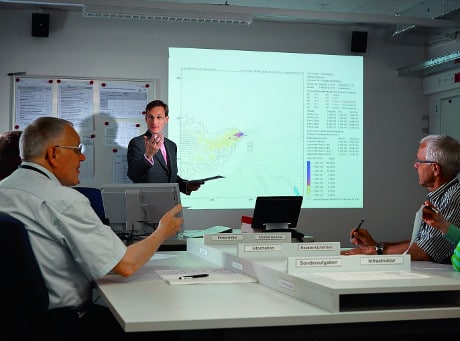
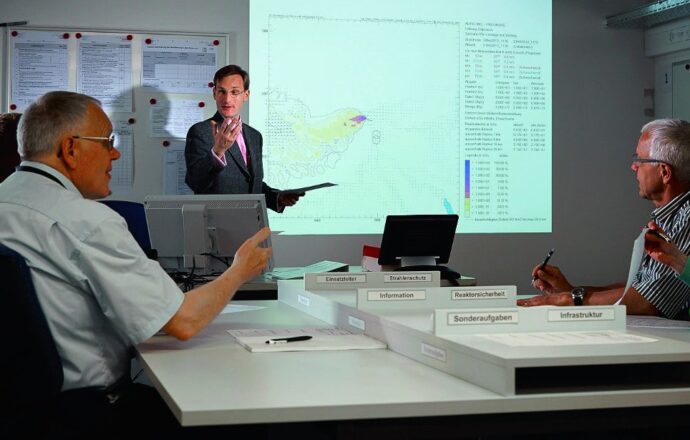
With the aid of a dispersion calculation, ENSI’s emergency organisation (responsible under Article 9 of the Emergency Preparedness Ordinance) can predict the direction in which radioactive substances will move in the atmosphere after being released from a nuclear installation and from what time particular areas will be affected. This allows the population to be alerted in good time and, where necessary, precautionary protective measures to be taken. Dispersion calculations also form the basis for the targeted deployment of measuring instruments and emergency services.
For atmospheric dispersion calculations such as these, ENSI uses the JRODOS system (Java-based Realtime Online Decision Support).
JRODOS: A brief overview
JRODOS was initiated within the framework of international cooperation in the field of radiological emergency preparedness and is developed by the Karlsruhe Institute of Technology (KIT) under EURATOM research programmes.
The programme’s development is coordinated by the RODOS Users Group (RUG), an assembly of all registered JRODOS users. Through both its membership of RUG and its service and maintenance contract with KIT, ENSI is able to contribute directly to this development and ensure its own requirements are taken into account.
The modular design of the system makes it possible to define model chains that comprise a sequence of individual modules, each of which handles specific tasks. In total, more than 25 modules are available for dispersion simulations, dose calculations, modelling of the food and feed chain, calculation of the effects of protective measures, and more.
The JRODOS system primarily offers broad simulation coverage and synergies with the National Emergency Operations Centre (NEOC), MeteoSwiss and the competent authorities abroad.
Operational use of JRODOS
JRODOS is operational for calculations at all Swiss nuclear installation sites:
- Routine calculations with a unit source (1 Bq/s) are automatically performed around the clock at hourly intervals and for three different release heights.
- In the event of an incident and during emergency exercises, incident-specific calculations are available no later than one hour after the ENSI emergency organisation has reached operational readiness.
The main purpose of the routine calculations is to ensure the continuous availability of the JRODOS system and to monitor current dispersion situations (forecasts for the next six hours at all Swiss nuclear installation sites). In addition, routine calculations can be used in the event of an incident to provide an initial assessment.
The main purpose of the incident-specific calculations in the event of an accident at a nuclear installation is to assess the risk to the population in the case of a release of radioactive substances that has already occurred or may occur at a later stage. These calculations form the basis for delineating a potentially affected area and for deciding on any measures that may be required to protect the population.
Example of a dispersion calculation
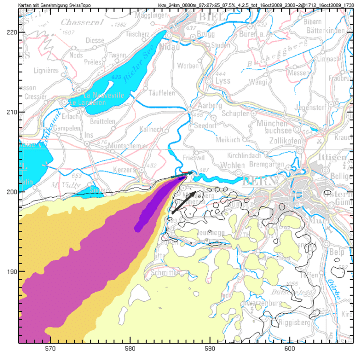
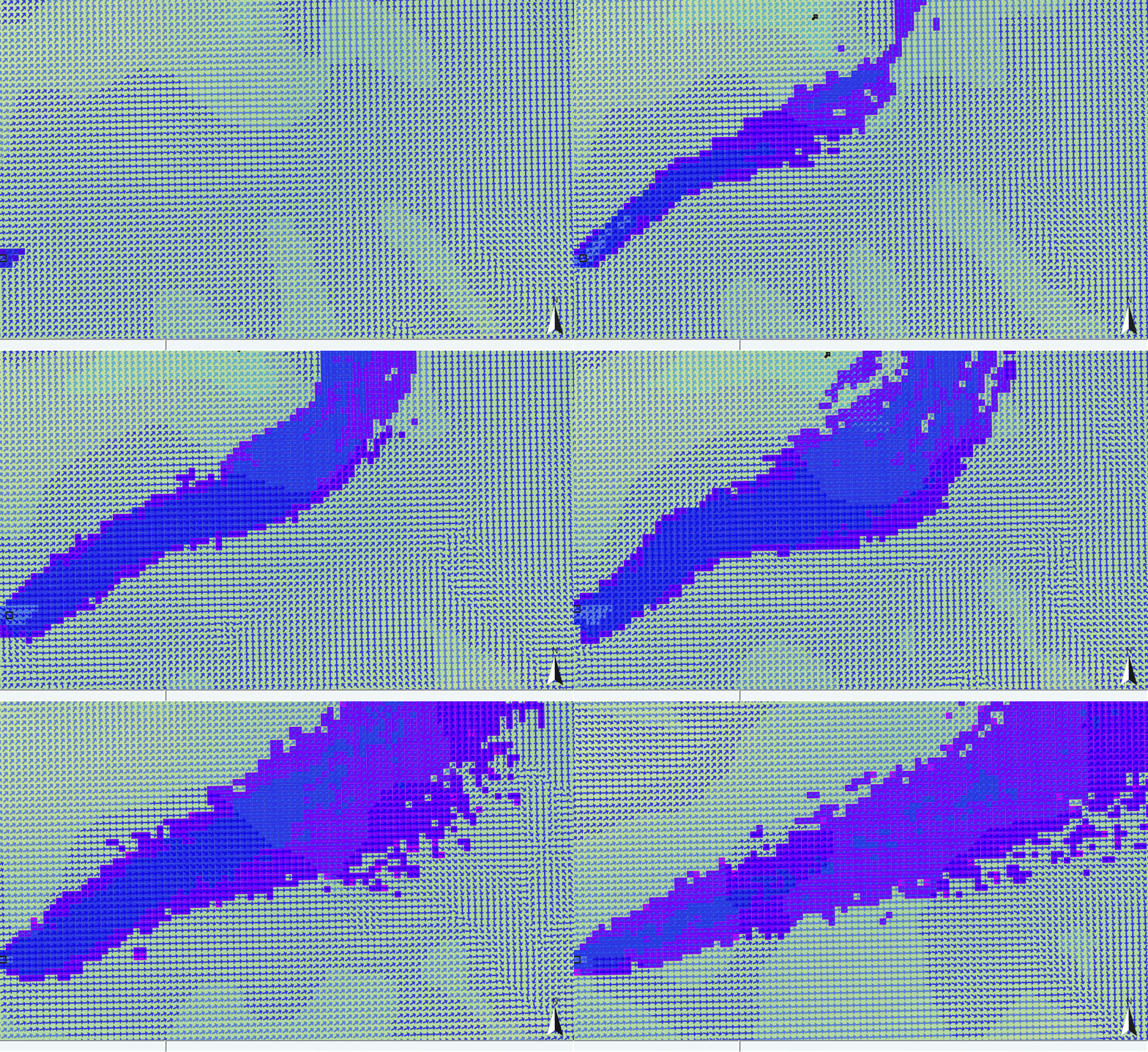
The video below shows the result of a routine dispersion calculation. It illustrates how a simulated release of radioactive substances would spread in the atmosphere. (Click on the video to start playback.)
Originally published on February 21, 2017, last updated on January 20, 2026.